Vitals & Body Measurements
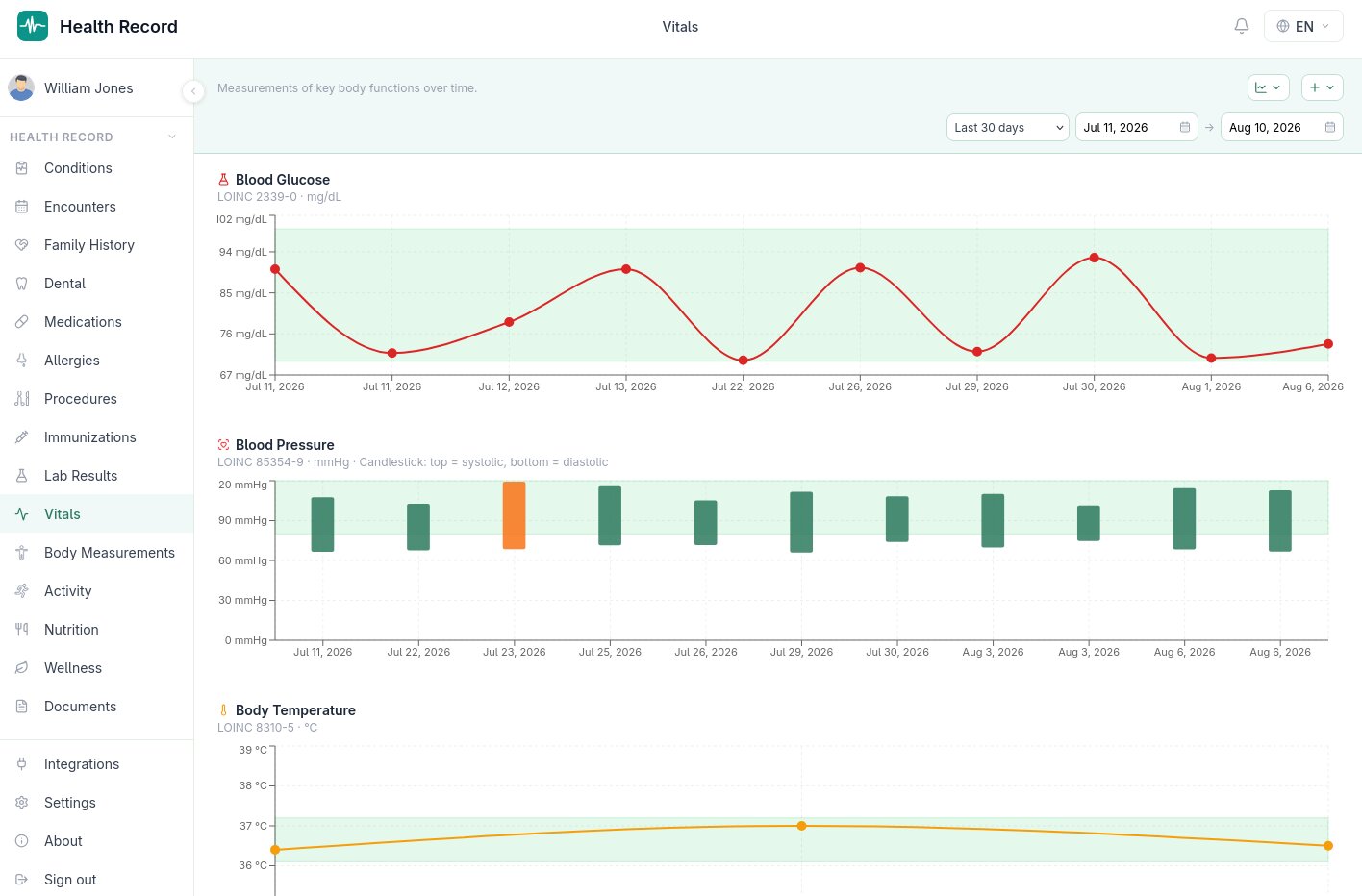
Vital signs
Health Record tracks nine vital sign types, each coded with a standard LOINC code so the value means the same thing to any system that later reads it: blood pressure, heart rate, resting heart rate, heart rate variability, body temperature, skin temperature, respiratory rate, oxygen saturation, and blood glucose.
Each entry records the value, the date and time it was measured, and an optional method or device note (useful for distinguishing a home cuff reading from one taken at a clinic). Blood pressure is the one exception with two numbers — systolic and diastolic — captured together as a single reading.
Body measurements
Nine body measurement types are tracked separately from vitals: weight, height, BMI, body fat percentage, lean body mass, bone mass, body water mass, basal metabolic rate, and head circumference. BMI is calculated automatically once both a recent weight and height are on record.
Trend charts
Every vital sign and body measurement type gets its own trend chart, plotting values over time so you can actually see a pattern rather than a list of disconnected numbers. Charts support date-range filtering — last 7 days, last 30 days, last year, or a custom range — with the same filter available across vitals, body measurements, and health events for consistent comparison.
Growth percentiles for children
For patients aged 0–20, weight, height, head circumference, and BMI measurements automatically appear on a dedicated Growth Percentiles view. Percentile curves follow the CDC 2000 LMS method — the same reference standard pediatricians use — with separate charts for the 0–2 year and 2–20 year age ranges, so a child's growth can be tracked against standard reference curves over time.
Adding a reading
From any vitals or body measurement screen, Add opens a form for the value, date/time, and optional notes. There's no requirement to log every type regularly — add whatever you actually measure, whenever you measure it. Historical values (e.g. backfilling a year of blood pressure readings from a paper log) can be entered with a past date at any time.