Medications, Allergies & Medical History
Conditions
Every diagnosis or ongoing condition is recorded with a status (active, resolved, or in remission), an onset date, and — critically — a real medical code. As you type a condition name, an autocomplete suggests matches against both ICD-10 and SNOMED CT, the two coding systems most clinical software actually reads. You can still save a condition without a code if you're not sure of one, but adding it makes the record genuinely portable later.
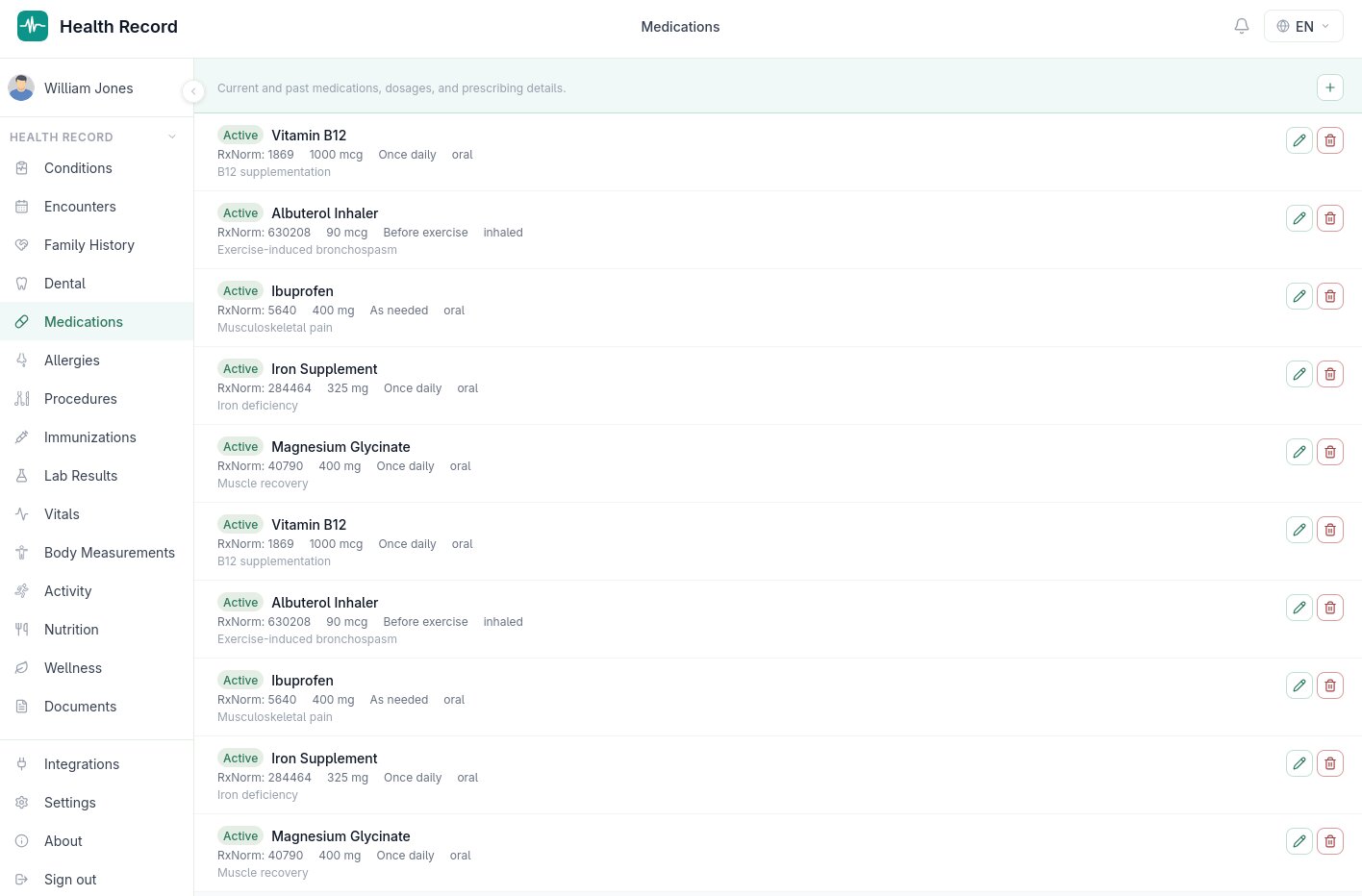
Medications
Each medication entry captures the drug name, dosage, frequency, route (oral, topical, injection, etc.), start date, and — if it's been stopped — an end date and reason. Active and past medications are shown separately, so your current medication list is always easy to find at a glance.
Allergies & intolerances
Allergies record the substance, the type of reaction, severity, and onset date. This is deliberately kept separate from medications: a drug allergy, a food allergy, and an environmental allergy are all tracked the same way, since all three matter equally in an emergency.
Immunizations
Vaccine records track the vaccine name, dose number, date administered, and administering provider or facility. Combined with export, this is what makes a SMART Health Card (see the Export & Sharing section) possible — that format is built specifically around verifiable immunization records.
Family history
Biological family members' conditions are tracked separately, with relationship (17 possible values, from parent to second cousin), condition, age of onset, and — where applicable — deceased status and age at death. This is often the first thing a new specialist asks about, and having it already organized saves re-answering the same questions at every visit.
Why the coding matters
None of this is free-text trivia. Every condition, medication, and immunization coded against a real standard is what allows the export pipeline (FHIR, CDA, HL7 v2) to actually be understood by other systems — a condition saved as plain text "high blood pressure" isn't portable the same way "Essential hypertension, ICD-10 I10" is.